
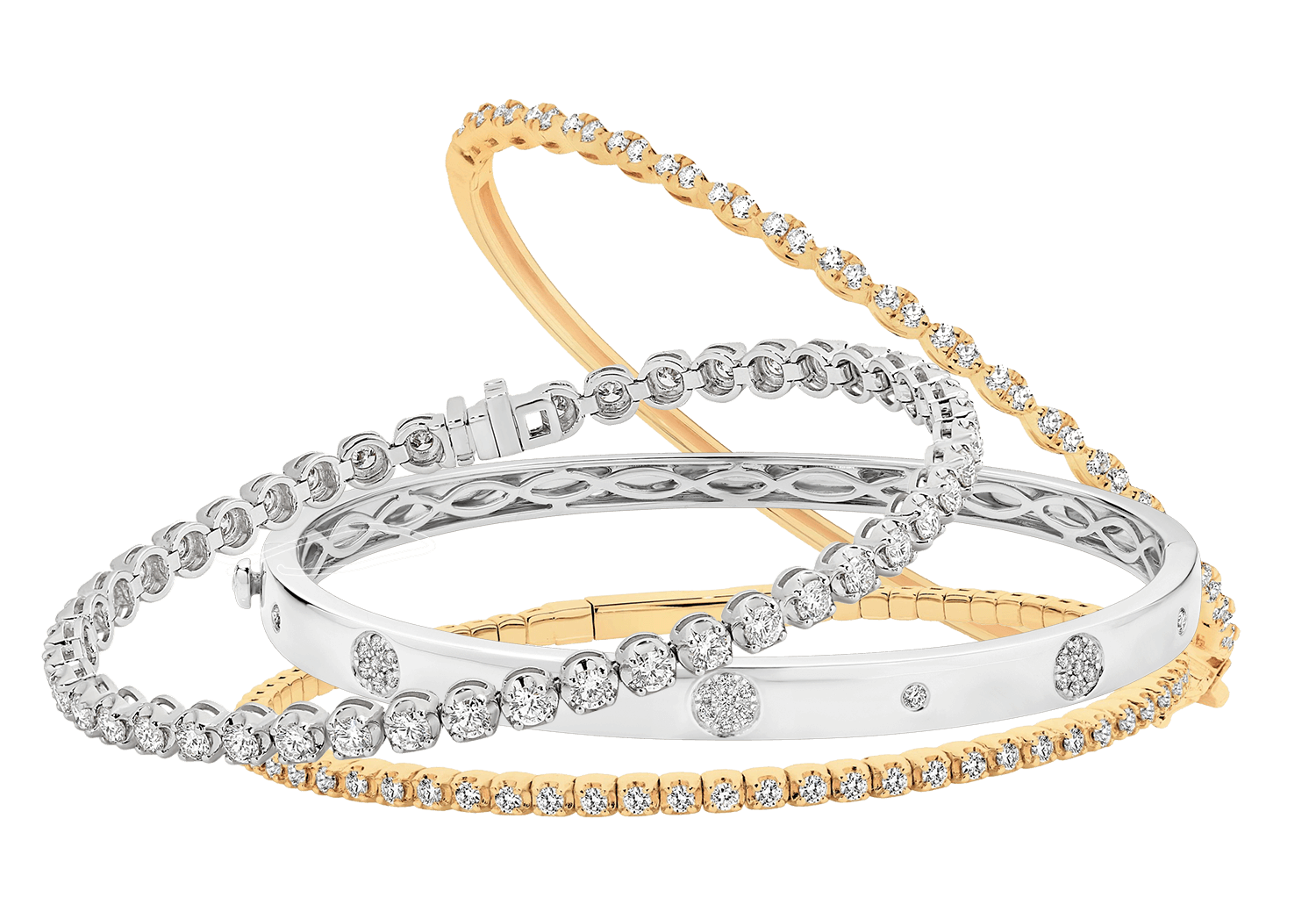

The best wedding band pairings rarely happen by accident. If you are wondering how to match wedding bands, the answer usually comes down to proportion, metal, wearability and the way the ring will look on your hand every day – not just in the display case.
For some couples, matching means a perfectly coordinated set. For others, it means choosing bands that feel connected without being identical. Both approaches can work beautifully. The key is understanding what should align, where contrast can add character, and which details matter most once the ring becomes part of daily life.
How to match wedding bands with an engagement ring
If the wedding band will sit beside an engagement ring, start there. The engagement ring is usually the visual anchor, so the band should complement its shape, height and overall style.
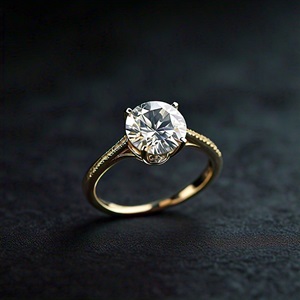
A classic solitaire is the most flexible option. It can suit a plain polished band, a diamond set eternity band, or a shaped band if the setting sits low. If the engagement ring has a halo, pavé shoulders or a more intricate setting, the wedding band often looks best when it echoes at least one of those design elements. That might be the same metal, a similar diamond size, or a matching profile.
Fit is just as important as style. Some engagement rings allow a wedding band to sit flush, while others leave a gap because of the setting. Neither is wrong. A flush fit creates a neat, continuous look. A slight gap can feel softer and more individual, especially with a sculpted or ornate engagement ring. If you prefer a close fit but the setting does not allow it, a contoured or custom-shaped band can solve the problem without forcing a design that does not suit the ring.
Start with the metal colour
Metal is often the first decision because it shapes the whole look of the set. Yellow gold tends to feel warm and timeless. White gold has a crisp, bright finish that pairs well with contemporary and diamond-heavy designs. Rose gold introduces softness and contrast.
The simplest option is to match the metal of the engagement ring. This creates consistency and usually gives the most cohesive result. If your engagement ring is in 18ct yellow gold, an 18ct yellow gold band will generally feel the most natural beside it.
That said, mixed metals can work extremely well when deliberately chosen. A white gold engagement ring with a yellow gold wedding band can look elegant and modern, particularly if the engagement ring includes yellow gold details or if you regularly wear both tones in your other jewellery. The trade-off is that mixed metals look more styled and less traditional, so they need to feel intentional rather than like a near miss.
Match the width and profile, not just the finish
One of the most overlooked aspects of matching wedding bands is ring proportion. Even a beautiful band can look out of place if it is too wide, too narrow or shaped too differently for the ring beside it.
The width should feel balanced on the finger. A very delicate engagement ring can be overwhelmed by a broad wedding band. Likewise, a substantial solitaire or halo may make an ultra-thin band look visually lost. You do not need an exact width match, but the two rings should look as though they belong in the same conversation.
Profile matters too. A court profile has a softly rounded shape and tends to feel classic and comfortable. A flat profile looks cleaner and more contemporary. A knife-edge band can add definition but may not sit as gently beside certain engagement ring styles. When both rings share a similar profile, the set usually appears more resolved.
The finish also plays a role. High polish is traditional and reflective. Matte, brushed or hammered finishes can be striking, but they introduce a different character. If one ring is highly refined and the other strongly textured, the contrast can feel either beautifully modern or slightly disconnected. It depends on the overall design.
Decide whether you want the band to blend in or stand out
Not every wedding band needs to disappear beside the engagement ring. Some are designed to quietly support the centre stone. Others are chosen to add sparkle, shape or contrast.
A plain band is the most understated option. It lets the engagement ring remain the focal point and tends to age well stylistically. It is also practical for people who want something durable and easy to wear on its own.
A diamond wedding band brings more light and presence to the set. This can be especially effective with solitaires, where the extra detail enhances the look without competing too much. The important point is scale. If the band diamonds are too large relative to the centre stone or side stones, the pairing can feel unbalanced.
An eternity style offers a more luxurious look, but it is not always the right choice for everyone. Full eternity rings are beautiful, though resizing can be difficult, and some people find them less practical for everyday wear. Half eternity styles often offer a better balance of sparkle, comfort and flexibility.
Consider lifestyle before fine detail
A wedding band is meant to be worn, not just admired. That is why lifestyle should guide the choice as much as appearance.
If you work with your hands, go to the gym regularly, or simply prefer jewellery you do not need to think about, a lower-profile band with fewer exposed edges may be the better option. A plain polished band or a channel-set diamond band can be more practical than a high-set pavé design.
Comfort is equally important. The ring should feel secure but not restrictive, particularly if it will be stacked beside an engagement ring every day. Finger size can also fluctuate with heat, travel and routine, so a professional fit matters more than many people expect.
This is one reason many clients value trying combinations in person. A pairing that looks perfect in photos may feel quite different once both rings are worn together.
How to match wedding bands as a couple
When two people are choosing wedding bands together, matching does not have to mean identical. In fact, it often should not.
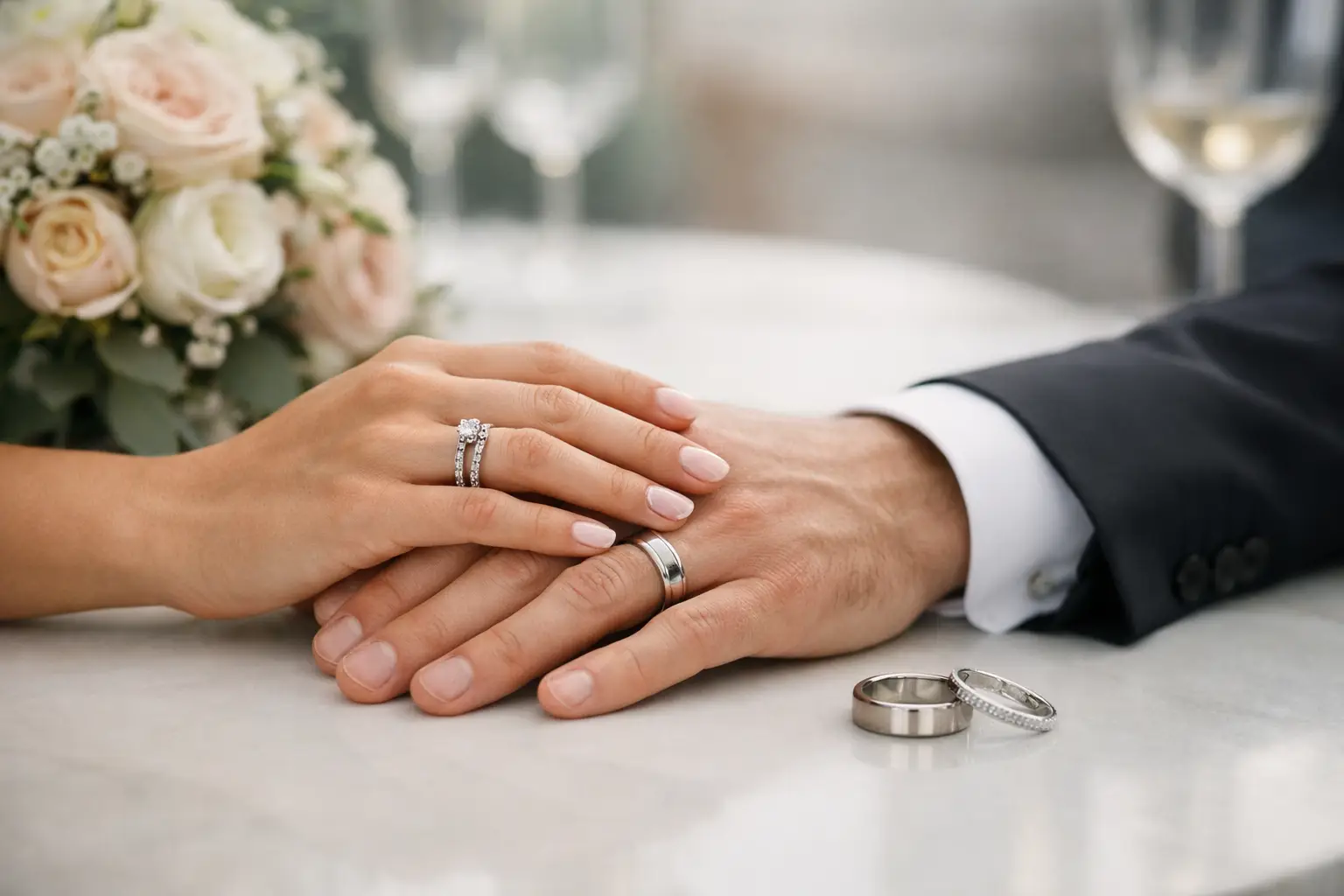
The strongest couples’ pairings usually share one or two common elements while still suiting each person individually. That common thread might be the metal’s colour, finish, profile, or an engraved detail. For example, one partner may choose a classic yellow gold band, while the other prefers a slightly wider version in the same metal and finish. The connection is clear, but each ring still feels personal.
If one partner wants a diamond set band and the other prefers a plain band, there is still room for harmony. Matching the metal and profile can be enough. If one prefers a modern flat band and the other leans towards a rounded court shape, keeping the same width or finish may create the right balance.
The point is not to force symmetry. It is to create a sense of belonging between the two rings.
When custom design makes more sense
Sometimes the best answer to how to match wedding bands is not to keep searching for a ready-made option. It is to have the band for the ring made.
Custom design is particularly useful when the engagement ring has an unusual setting, a low basket, a distinctive shape or fine details that deserve a more precise match. A custom wedding band can be shaped to sit neatly, match the proportions more accurately, and reflect the same design language without copying the engagement ring too literally.
It can also be the right move for couples who want their bands to share subtle details that are hard to find off the shelf. This might include a specific gold tone, a particular band thickness, or a refined diamond layout chosen to suit a set budget.
At the premium end of the market, custom does not mean complicated for the client. It means the ring is resolved properly, rather than compromised.
Small details that change the final look
Once the main decisions are made, the finishing details can make a meaningful difference. The setting style of any diamonds, the exact height of the band, milgrain edging, engraving and even the way the rings sit against the finger all affect the final result.
This is where expert guidance becomes valuable. Two bands may look similar in a tray, yet one will sit better, wear better and complement the engagement ring more convincingly. That difference often comes down to details most people would not be expected to spot on their own.
For clients investing in a ring to wear for decades, that level of consideration is worth it. At Forever by Temptation, matching bands is not treated as a quick add-on purchase. It is part of creating a finished piece of jewellery that looks right, feels right and remains elegant long after the wedding day.
The right wedding band should feel effortless once it is on your hand. If you are choosing carefully, that usually means you are not just matching rings – you are matching design, comfort and the life the piece is meant to live.