
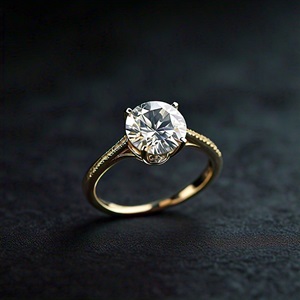

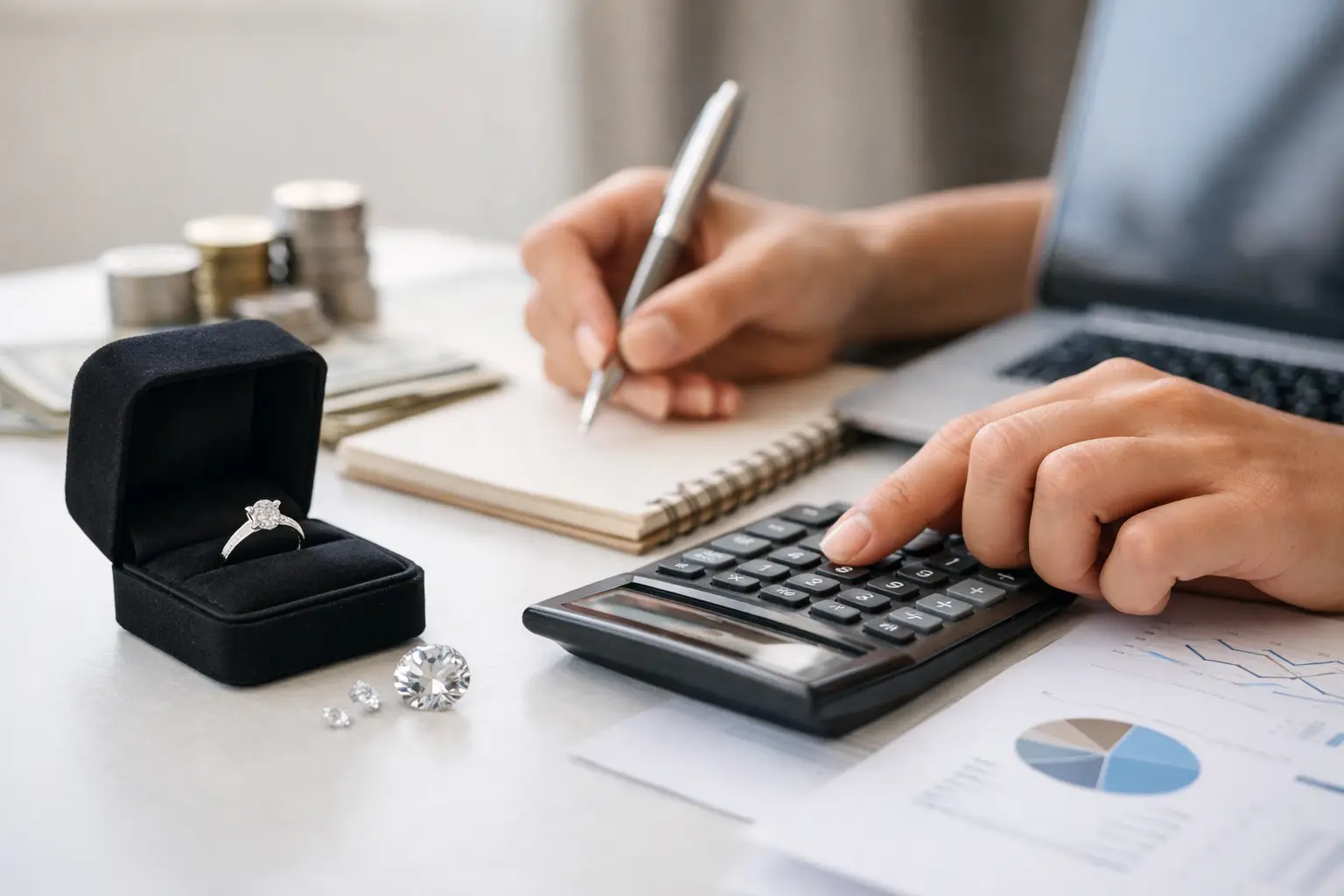
Sticker shock usually happens before the romance wears off. You start with a rough number in mind, and then a single change in diamond size, metal, or setting can shift the price by far more than you expect. That is where an engagement ring budget calculator becomes useful – not as a rule, but as a practical way to turn a vague budget into a clear buying plan.
For most buyers, the real question is not simply what to spend. It is how to spend well. A ring intended for lifelong wear should balance visual impact, diamond quality, craftsmanship and financial comfort. A good calculator helps you weigh those factors early, before you fall in love with a ring that sits well outside what feels sensible.
What an engagement ring budget calculator should actually do
The best engagement ring budget calculator is not a gimmick that spits out a number based on an old-fashioned salary formula. Those formulas are simple, but they are rarely helpful. They ignore your savings, other financial goals, lifestyle, and whether you prefer to allocate more of the budget to the centre diamond or the overall design.
A more useful calculator starts with your comfortable spending range and then helps you test different combinations. If your budget is $6,000, for example, it should show how that spend might shift depending on whether you choose a natural diamond or a lab-grown diamond, a solitaire or halo setting, and 18ct yellow gold versus platinum.
That matters because ring pricing is not linear. A small increase in carat weight can lead to a noticeable jump in cost, especially for natural diamonds. The same applies when moving up in colour or clarity grades beyond the point where the difference is difficult to see with the naked eye. A calculator worth using should help you recognise where money makes a visible difference and where it may not.
Start with your real budget, not a borrowed rule
The right budget is personal. Some couples are comfortable spending five figures on an engagement ring because they are prioritising a major milestone purchase and want a substantial diamond. Others prefer to stay more conservative because they are planning a wedding, saving for a property or simply do not see value in overspending.
A realistic starting point is the amount you can spend without creating pressure after the purchase. That usually means looking at available savings, any upcoming shared expenses and whether you want room for future customisation, wedding bands or insurance. Emotional purchases still benefit from clear maths.
In Australia, buyers often arrive with a broad range rather than a fixed number. That is sensible. A budget of $8,000 to $10,000 gives more flexibility than insisting on a hard cap too early. It allows you to compare which changes matter most at each level, instead of assuming every extra dollar delivers the same return in terms of beauty or quality.
How to use an engagement ring budget calculator well
A calculator works best when you use it to compare priorities, not just hunt for the largest carat weight. Start with the total amount you are genuinely prepared to spend. Then break the ring down into the factors that most influence value: centre stone, setting style, metal, and any side stones or custom design details.
The centre diamond usually takes the largest share of the budget, but not always. If your partner prefers a refined solitaire, more of the spend can go into a higher-quality diamond. If they love a detailed setting, a hidden halo, a diamond band, or a vintage-inspired design, the mounting itself may deserve a larger share of the budget.
It is also worth deciding whether visual size or technical grading matters more to you. Some buyers want the strongest possible face-up presence and are happy to be flexible on colour or clarity within a well-selected range. Others want a tighter grade profile because they value rarity and specification as much as appearance. Neither approach is wrong. The calculator simply helps reveal the trade-offs.
The biggest pricing variables
Carat weight is usually the first figure buyers notice, but cut quality often has the greatest effect on beauty. A well-cut diamond can appear brighter and more lively than a larger stone with weaker proportions. If you are trying to maximise value, protecting cut quality is usually wise.
Colour and clarity need a more measured approach. Moving from near-colourless to higher colour grades can quickly increase price, but the visual difference depends on shape, size and setting. The same goes for clarity. Many diamonds with inclusions not visible to the naked eye offer excellent value compared with higher-clarity grades that command a premium, mostly on paper.
Metal choice can also shift the budget. Platinum generally costs more than 18ct gold, and more intricate settings require more labour. A simple solitaire may allocate more budget to the diamond itself, while a halo or trilogy design can create a larger overall look at a different cost.
Natural vs lab-grown diamonds in the calculator
One of the most important variables in any engagement ring budget calculator today is whether you are considering a natural or lab-grown diamond. The difference can be substantial, and for many buyers, it changes the entire scope of what is possible.
With natural diamonds, part of the value comes from rarity and long-term desirability. Buyers who want that sense of geological history often prioritise natural even if it means choosing a slightly smaller stone or adjusting clarity and colour expectations.
With lab-grown diamonds, the budget can stretch further toward larger sizes or more specifications. That may allow you to secure a larger centre stone, a more complex setting or a stronger overall combination of carat, colour and clarity for the same spend. The trade-off is not visual quality in the ring itself, but rather how you personally weigh origin, rarity, and value.
For many Australian couples, this is the point where expert guidance matters most. A calculator can show numerical possibilities, but it cannot tell you which option best fits your priorities. That decision benefits from comparing real stones rather than just reading a chart.
Why cheap calculations can be expensive
A simplistic calculator can mislead buyers. If it focuses too heavily on carat weight, you may end up compromising cut to reach a size target. If it treats all diamonds within the same grades as equal, it misses the fact that two stones with identical certificates can look very different in person.
That is why budget planning should always sit alongside diamond selection expertise. The aim is not merely to spend less. It is to direct your budget towards the qualities that actually improve the finished ring.
At Forever by Temptation, sourcing experience makes a measurable difference. Access to a broad range of diamonds allows more precise matching between budget and outcome, especially when a customer wants to prioritise one feature without overpaying on another.
A realistic example of budget planning
Imagine a buyer with a $10,000 budget. A calculator might show several valid directions. One path could be a natural round brilliant solitaire in 18ct yellow gold, with a well-chosen centre stone just below the major carat threshold. Another could be a larger lab-grown oval in a platinum hidden halo setting. A third could favour a natural diamond of smaller size but stronger colour and clarity in a timeless six-claw design.
Each option spends the budget differently. None is automatically best. The right answer depends on whether the wearer values finger coverage, classic rarity, minimalism or added design detail.
This is exactly why the budgeting stage should feel clarifying, not restrictive. Once you understand what drives price, you can make confident choices rather than guess.
What to do after using a calculator
Once you have a budget range and a sense of your priorities, the next step is to test that budget against actual ring options. This is where many buyers discover that a modest adjustment – sometimes up, sometimes down – produces a better result than expected.
You may find that spending slightly less still achieves the look you want by selecting a smarter combination of grades. Or you may decide that one meaningful upgrade, such as stronger cut quality or a custom setting, is worth stretching for. Both outcomes are useful because they come from informed comparison rather than emotion alone.
If you are buying for a proposal and trying to keep the process discreet, focus on broad preferences first: shape, metal colour, natural or lab-grown, and whether your partner leans toward classic or more distinctive styles. Those details will improve the accuracy of any engagement ring budget calculator far more than relying on a generic spend rule.
The most reassuring budgets are not the ones that chase a number. They are the ones that leave you with a ring you are proud to give, comfortable to pay for and happy to see worn every day for years to come.